

Let us say that for an initial state S0 of the channel, the DMS X emits sequence

|
|

|
|
|
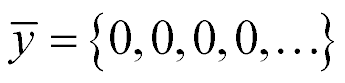
The generation of same output sequence y̅ for two or more different sequences x̅ is called catastrophic sequence system. Thus ambiguous x̅.
In the above example if we knew a priori about the initial state S(n−1) (i.e, either S0 or S1), we can decode y̅ into sequence x̅. This is called state dependent decoding.
Since the system has the property of state dependent decoding, the question arises
how much of the information in y̅ is from X?
if not all of the information in y̅ is from X, where did the extra information come from?.
Therefore
how do we get this 'something' which is a measure of I(X; Y)?
❶
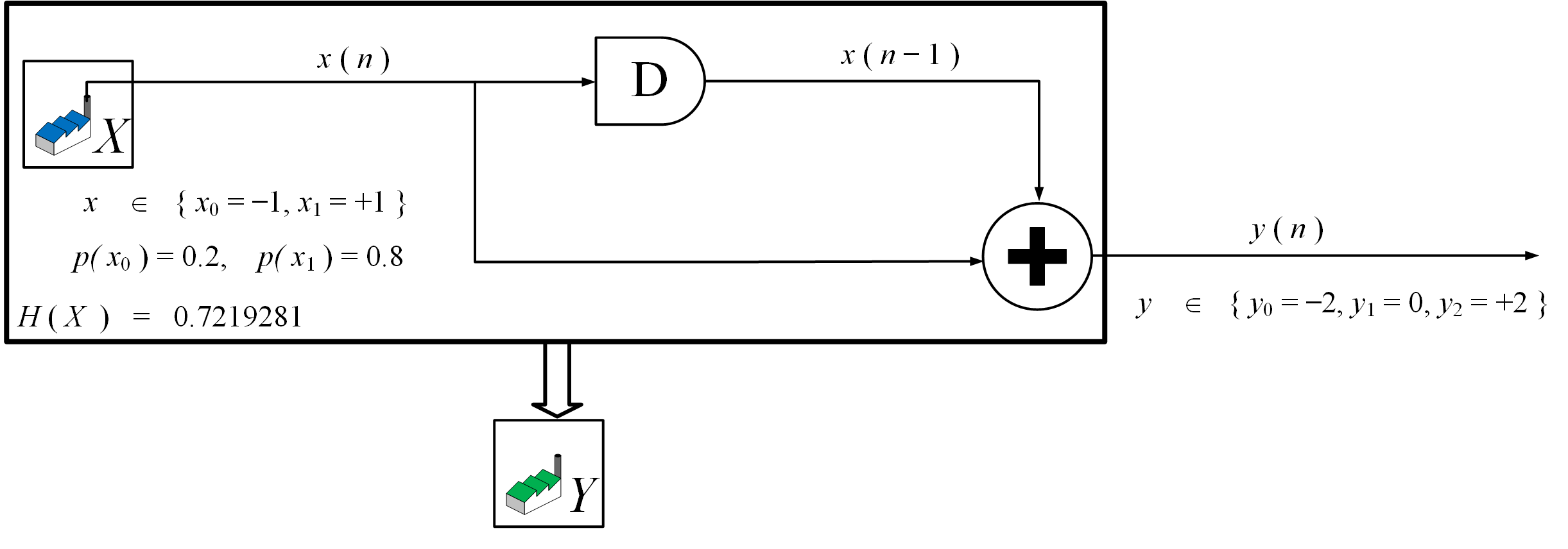
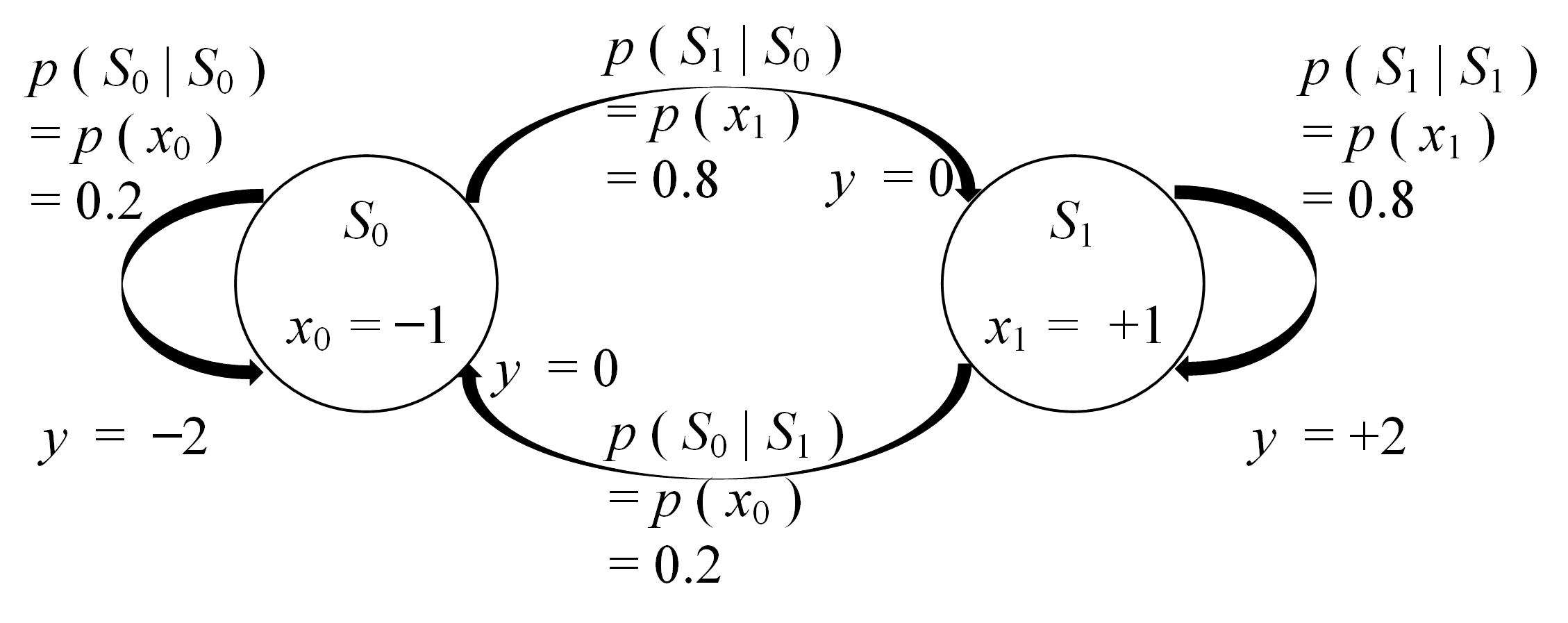
The state diagram is therefore
![vector of length 2, mu at n+1 is equal to [0.2, 0.2; 0.8, 0.8] times [mu sub 0 at n; mu sub 1 at n]](math/vectormuatnplus1EgCompute2.gif)
|
![vector of length 2, steady-state of mu at n+1 is equal to [0.2(mu sub 0 + mu sub 1); 0.8(mu sub 0 + mu sub 1)] = [0.2; 0.8]](math/vectormuEgCompute2.gif)
|
From the state diagram we also see that

|
![F = [0.2, 0; 0.8, 0.2; 0 0.8]](math/matrixFequalsEg2values.gif)
|
|
 imply?
☛
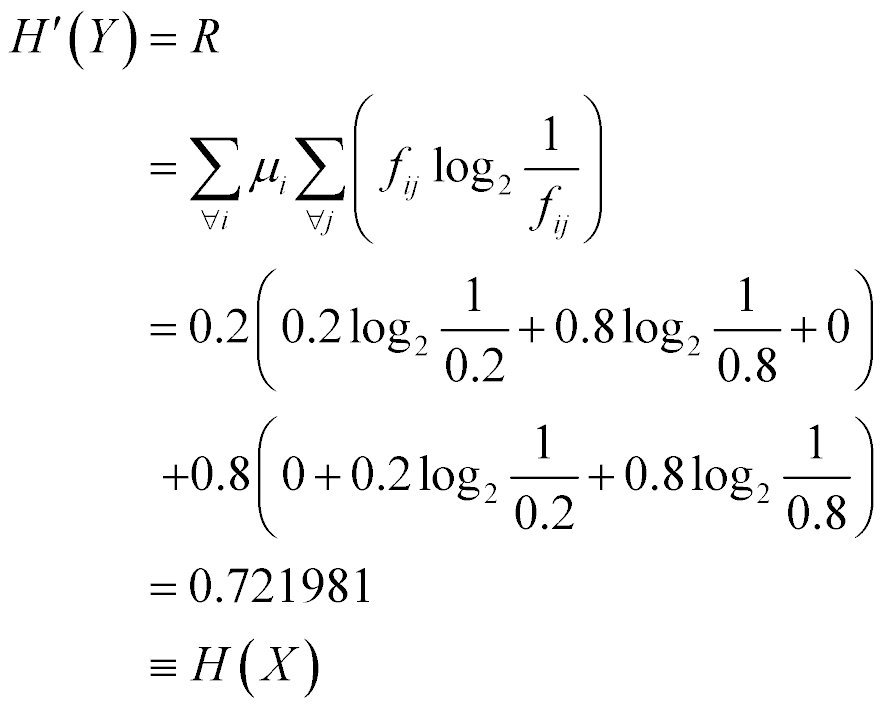
This means that H'(Y) is tracking  . This therefore implies that the channel is not really losing any information from X. (Thus answering, how much of the information in y̅ is from X?)
Being a catastrophic sequence system the input sequence x̅ is ambiguous. Our example system also has the property of state dependent decoding. That is, with a priori knowledge of the initial state S(n−1) we can decode y̅ to x̅. Thus making unambiguous identification of x̅. The question is therefore,
how to deal with initial state dependency and decoding? ❹